
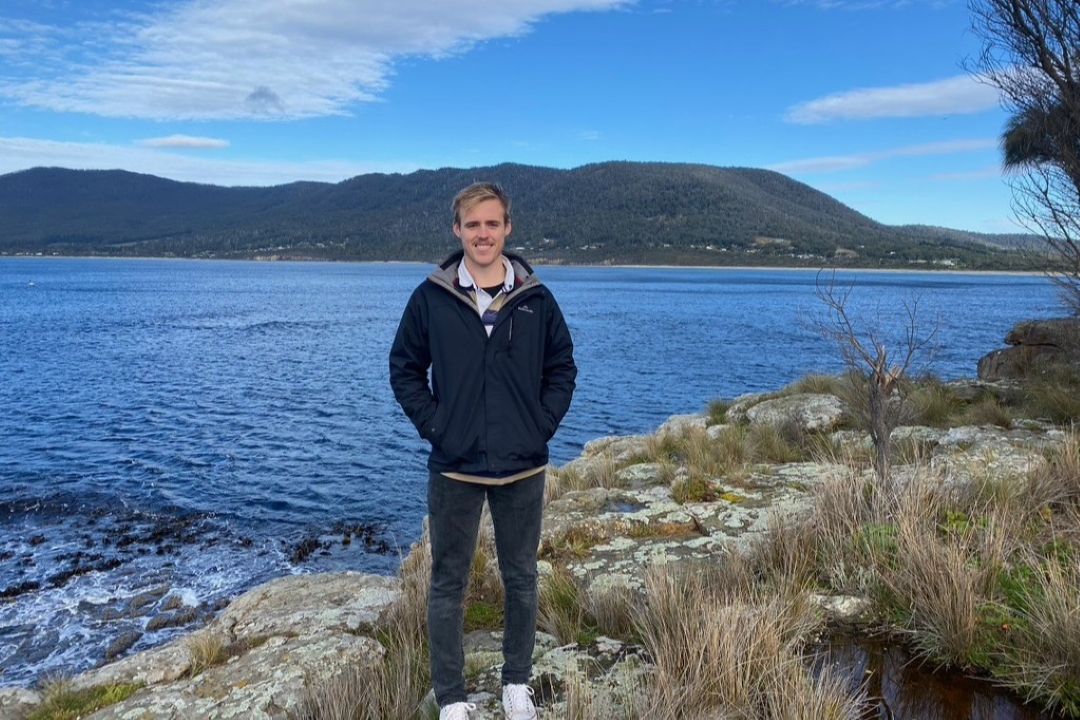
Coby Heluar
WINEMAKER
AT FALSE CAPE WINES
“The excitement of harvest, combined with the art and science of transforming grapes into wine, confirmed that this was the career I wanted to pursue.”
When did you realise you wanted to become a winemaker?
After leaving school, I completed a vintage and immediately fell in love with the energy of winery life. The excitement of harvest, combined with theart and science of transforming grapes into wine,confirmed that this was the career I wanted topursue.
Please tell us about your career so far.
My career began with a vintage at Lake Breeze in Langhorne Creek before spending four years at Gemtree Wines in McLaren Vale and another four years at Shaw + Smith in the Adelaide Hills. Along the way I also gained valuable experience with vintages in the Clare Valley and Rheinhessen, Germany. I completed my Bachelor of Wine Science through Charles Sturt University, building the technical knowledge to complement my hands-on experience .
What do you love most about being a winemaker?
Opening a bottle of wine that you’re genuinely proud of and seeing, in every glass, the culmination of all the decisions, care and hard work that brought it to life, from the vineyard through to the winery.
Is there any vintage you’re particularly proud of creating? Why?
The La Niña growing seasons of 2021 and 2022were particularly challenging.
Despite the difficult conditions, they ultimately rewarded us with wines displaying beautiful natural acidity, balance and vibrant flavour, demonstrating the resilience of both the vines and the region
How does the local climate/soil affect the wine you make?
The False Cape vineyard is planted on classic terra rossa soils over limestone. This combination produces white wines with distinctive minerality and reds with depth, structure and character. Our cool maritime climate allows for a long, slow ripening season, resulting in wines with exceptional natural acidity, balance and elegance.
What is your favourite wine, and what food do you typically pair it with?
False Cape Willson River Riesling with freshly caught Kangaroo Island whiting. It’s a pairing that perfectly captures the freshness and character of Kangaroo Island.
Is there a specific process you follow when developing a new wine?
When working with a new vineyard block or creating a new wine, I prefer to take a hands off approach. I believe in allowing the fruit to express itself naturally, observing and learning at every stage, and letting the wine reveals its own character rather than forcing a predetermined style.
Which of your own varieties do you typically indulge in?
I’m a Riesling enthusiast, and I believe our Willson River Riesling showcases just how special our valley on Kangaroo Island can be. The False Cape Shirazis another personal favourite, consistently showing depth, spice and elegance.
Where do you see yourself in five years?
Kangaroo Island is still a young and emerging wine region, and that’s what makes it so exciting. We’re helping shape the region’s identity without being constrained by tradition or expectations about which varieties should be grown. Every vintage presents an opportunity to refine our craft and demonstrate the remarkable quality this region can produce. My goal is to see Kangaroo Island recognised alongside Australia’s, and ultimately the world’s, great wine regions.